Electrical Safety and High Voltage Compilance Checklist

Electric Vehicle & Charging Station Industry

Critical - Grounding & Earthing Systems
Main earthing grid is installed as per IS 3043 with proper electrode spacing.
Earthing pit test records are updated quarterly.
All metallic structures, chargers, and enclosures are bonded to earth.
Earth busbars and conductors are free from corrosion and tight at joints.
Neutral and earth are properly segregated in all panels.
Earthing connections for EVSE DC output are inspected and recorded.
Lightning arrestors are installed and tested annually.
Earthing test points are clearly marked and easily accessible.
Critical - Lockout/Tagout (LOTO) Procedures
LOTO procedure is implemented for all maintenance activities.
Personnel performing LOTO are trained and authorized.
Energy isolation points are clearly identified and labeled.
LOTO locks, keys, and tags are stored securely when not in use.
Periodic LOTO audits are performed to ensure compliance.
Emergency Preparedness & Response
Electrical incident response plan is displayed and understood by team.
Emergency contact numbers are displayed near switchgear and control rooms.
Electrical first-aid kit and insulating rescue rod available at HV rooms.
Fire detection and suppression system functional in HV rooms.
Periodic mock drills conducted for electrical shock and fire incidents.
Maintenance - Electrical Panels & Equipment
All electrical panels are dust-free, sealed, and labeled with feeder names.
Panel doors have interlock systems to prevent opening under load.
Circuit breakers and isolators are tested for mechanical operation.
All cable terminations are tight and insulated with proper lugs and sleeves.
Busbars are properly insulated and color coded (R-Y-B-N).
Electrical insulation resistance (IR) testing conducted annually.
Earth continuity testing is performed for all equipment.
Safety - PPE & Personal Protection
All electrical technicians wear insulating gloves rated for voltage.
Arc flash suits, face shields, and boots are available for HV operations.
PPE inspection records are maintained and updated monthly.
Eye wash stations and rubber mats are placed near electrical panels.
Electrical personnel are prohibited from wearing metal jewelry or conductive items.
Emergency stop and isolation switches are accessible at all times.
Super Critical - High Voltage System Safety
All high-voltage systems are clearly labeled with warning signage.
Only authorized and trained personnel access high-voltage areas.
High-voltage cabinets and enclosures are kept locked when not in use.
Electric shock risk signage is displayed near all live panels and transformers.
High-voltage cables and terminations are intact with no visible damage or moisture.
Testing & Calibration - Instruments & Tools
Voltage testers, clamp meters, and IR testers are calibrated annually.
Dielectric strength of insulating tools verified as per standard.
High-voltage gloves and mats undergo dielectric test every 6 months.
Ground resistance tester and insulation tester are maintained in good condition.

Edit & customize templates as per your needs in simple steps

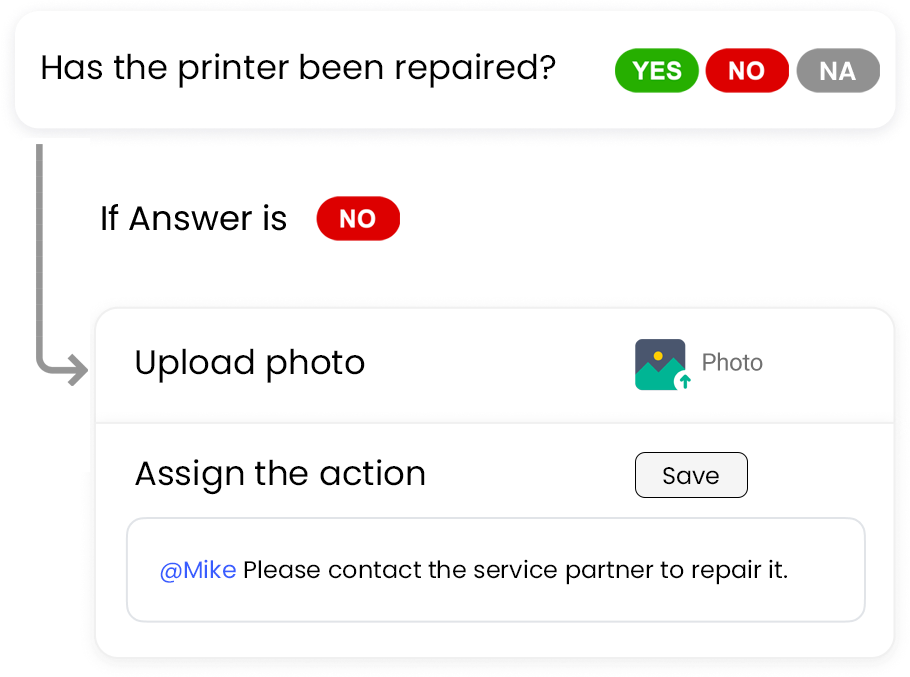
Pulse allows you to edit the checklists from the library to suit your specific needs. With our smart checklist builder and editor, you can infuse logic in your questions for more clarity and better visibility.

SIGN UP TO EDIT TEMPLATES
Digitize your existing templates in simple steps

Pulse helps you convert your existing inspection templates into digital ones. Simply upload them in PDF, Excel and Word format and leave the rest for our support team. We will get back to you with digital forms.