EV Transportation Storage and Logistics Checklist

Electric Vehicle & Charging Station Industry

Critical - Battery Handling & Packaging
Battery packs are shipped in OEM-approved containers or crates with insulation and cushioning.
All battery terminals are covered or insulated to prevent short circuits.
Packaging material is non-flammable and shock-resistant.
Batteries are stored and transported at safe SOC levels (30–50%).
Defective or damaged batteries are segregated and clearly labeled “For Disposal.”
Temperature and humidity during transport are monitored using data loggers.
No liquids or flammable materials are transported alongside batteries.
Proper lifting equipment is used for heavy battery modules.
Packaging labels include manufacturer name, model number, voltage, and hazard class.
Documentation & Traceability
Shipping documents include serial numbers, battery IDs, and destination.
Logistics partner and transporter details recorded for each shipment.
Battery condition checklist completed before dispatch and after delivery.
Transport audit conducted quarterly to verify compliance with safety standards.
Logistics - Loading & Unloading Procedures
Trained personnel supervise loading and unloading of EVs or batteries.
Batteries are loaded securely using straps, clamps, or anti-slip mats.
Stacking height and weight limits are followed as per packaging design.
Forklift operators are trained and certified for handling battery shipments.
No dragging or tilting of battery crates during movement.
Vehicle parking brakes engaged during loading/unloading.
Maintenance - Transport Vehicle Safety
Transport vehicle fire extinguishers (Class D, CO₂, or foam) are present and serviced.
Emergency shutdown switch or battery isolation point available in the transport vehicle.
Vehicle ventilation or cooling system functional for long battery hauls.
Vehicle floor and securing points are non-conductive and corrosion-free.
Fire blankets and spill containment kits available in vehicle.
Driver’s cabin separated from cargo area by fire-retardant partition.
Safety & Emergency Preparedness
Emergency response plan displayed in warehouse and transport office.
Staff trained in battery fire and chemical spill response.
Mock drills for fire and evacuation conducted quarterly.
Storage - Warehouse & Facility
Storage area temperature maintained between 15°C and 30°C.
Humidity in storage maintained below 50% RH.
Storage racks are labeled with load rating and material ID.
Warehouse flooring is clean, level, and anti-static.
Fire detection and alarm systems functional in storage zones.
Segregation between active, defective, and scrap battery storage areas maintained.
No combustible or explosive items stored near battery stock.
Super Critical - Transport Authorization & Compliance
All vehicle and battery shipments comply with UN38.3, IATA, and ADR transport regulations.
Transport vehicles carrying lithium batteries are DG (Dangerous Goods) certified.
Transport manifests include correct classification, packaging group, and hazard labels.
Drivers are trained in handling EV batteries and emergency response procedures.
Insurance coverage for EVs and batteries includes fire, damage, and leakage incidents.

Edit & customize templates as per your needs in simple steps

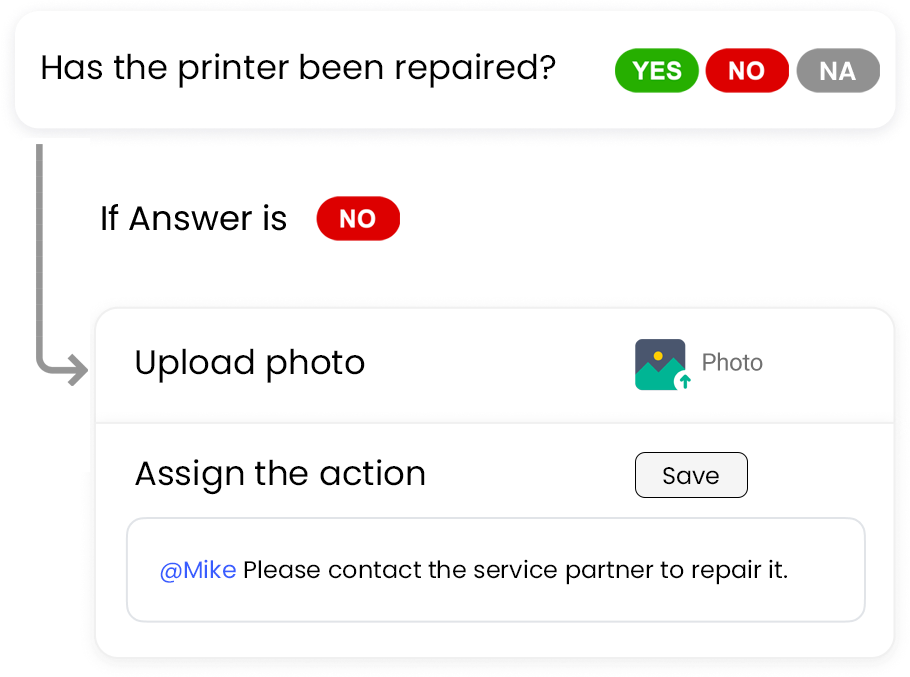
Pulse allows you to edit the checklists from the library to suit your specific needs. With our smart checklist builder and editor, you can infuse logic in your questions for more clarity and better visibility.

SIGN UP TO EDIT TEMPLATES
Digitize your existing templates in simple steps

Pulse helps you convert your existing inspection templates into digital ones. Simply upload them in PDF, Excel and Word format and leave the rest for our support team. We will get back to you with digital forms.