EV Manufacturing and Assembly Operations Checklist

Electric Vehicle & Charging Station Industry

Critical - Component Quality Inspection
Incoming material inspection is performed for all major components (motor, battery, controller).
Chassis weld joints are inspected visually and dimensionally.
Brake systems undergo functional and hydraulic pressure testing.
Steering system torque and play are tested before vehicle rollout.
All fasteners are tightened using calibrated tools with traceable serial numbers.
Visual inspection for paint finish, surface defects, and color match is performed.
All lights, indicators, and horns are checked at the end-of-line (EOL).
Functional testing of onboard display and dashboard systems is performed.
All sensors and wiring harness connectors are secured properly.
Drive motor mounting bolts are tightened as per torque specifications.
Documentation & Record Keeping - Quality Records
All inspection reports are stored digitally with VIN-based traceability.
Deviations and reworks are logged and approved by quality head.
Process control charts are maintained for torque, alignment, and current draw.
End-of-Line Testing - Critical
Each EV undergoes functional testing including motor, brakes, lights, and battery.
Noise, vibration, and harshness (NVH) testing is done before dispatch.
PDI (Pre-Dispatch Inspection) checklist is completed for every vehicle.
Hygiene & Safety - Fire & Emergency Preparedness
Fire suppression system is installed near battery assembly lines.
Emergency exit routes are illuminated and obstruction-free.
First-aid kits are available and checked for expiry dates.
Hygiene & Safety - Personal Protective Equipment
Operators wear appropriate PPE (helmet, gloves, safety shoes, antistatic clothing).
Eye wash and fire extinguishers are installed near high-risk zones.
No unauthorized personnel in critical assembly areas.
Safe lifting and handling practices are followed for motors and batteries.
Logistics & Material Handling - Critical
Material movement is done using defined pathways and trolleys.
Material identification tags and batch labels are clear and traceable.
Kanban or FIFO practices are followed for component issuance.
Rejected material is stored in a segregated and marked area.
Maintenance - Equipment & Tools
All production jigs, fixtures, and alignment tools are inspected daily.
All assembly tools and machines have updated calibration tags.
Air compressors and pneumatic lines are clean and moisture-free.
Assembly floor has no oil spillage, metal scrap, or debris.
Workstation lighting is adequate for visual inspection tasks.
Super Critical - Production & Process Control
All EV assembly lines follow OEM-standard torque and fastening procedures.
Powertrain alignment and mounting are verified using calibrated alignment tools.
All electrical connectors and harnesses are properly routed and insulated.
EV motors are tested for insulation resistance before final fitment.
Software and firmware updates are validated before vehicle dispatch.
Training & Competency - Workforce
All operators are trained and certified for assigned workstations.
Refresher safety and quality training conducted every 6 months.
New operators undergo induction and safety orientation before joining.

Edit & customize templates as per your needs in simple steps

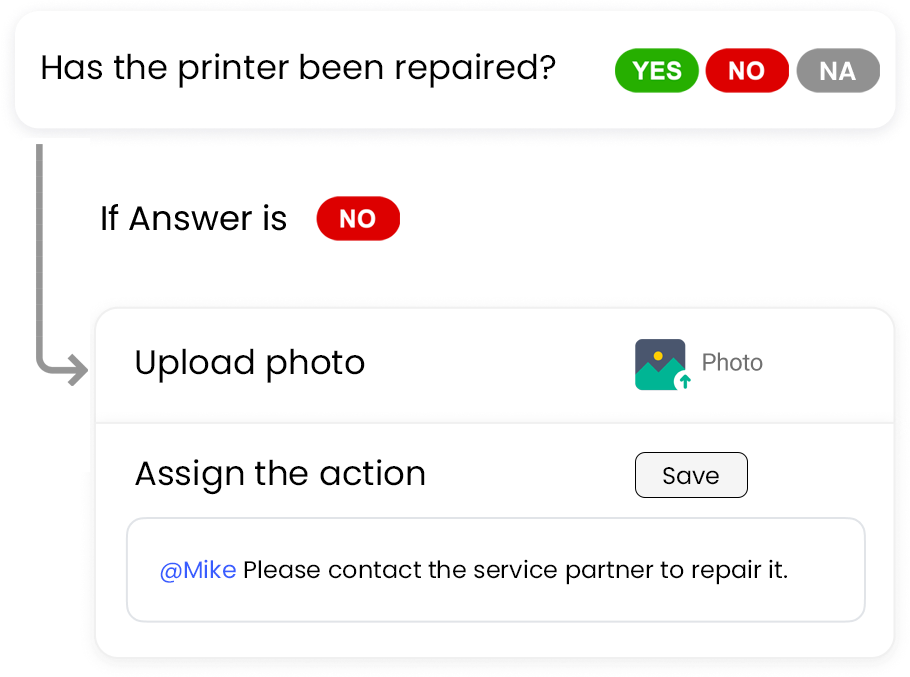
Pulse allows you to edit the checklists from the library to suit your specific needs. With our smart checklist builder and editor, you can infuse logic in your questions for more clarity and better visibility.

SIGN UP TO EDIT TEMPLATES
Digitize your existing templates in simple steps

Pulse helps you convert your existing inspection templates into digital ones. Simply upload them in PDF, Excel and Word format and leave the rest for our support team. We will get back to you with digital forms.