Emergency Response , Fire & Safety Preparedness Checklist

Electric Vehicle & Charging Station Industry

Continuous Improvement & Review
Annual emergency preparedness review conducted by EHS and management.
Critical - Battery & Electrical Fire Management
Lithium battery storage and service areas have Class D extinguishers or sand buckets.
No water-based extinguishing used on electrical or battery fires.
Fire blankets or thermal barriers are available near high-voltage and battery areas.
Battery thermal runaway sensors are connected to fire alarm system.
Insulated tools and PPE are available near battery service and charging zones.
Fire response plan includes procedures for electrical isolation during incidents.
Documentation & Recordkeeping
Fire and safety inspection reports maintained for minimum 3 years.
Emergency drills, incidents, and maintenance logs are digitized for traceability.
All fire extinguishers and alarm systems have asset IDs for digital tracking.
Emergency Response - Incident Management
Emergency Response Team (ERT) trained for fire, shock, and chemical spill events.
Emergency contact directory includes fire, ambulance, police, and internal EHS.
Incident reporting and investigation system in place.
Spill kits and containment barriers available for coolant or electrolyte leaks.
Crisis management plan includes procedures for power outage and charger failure.
Environmental & Hazard Control
No flammable waste or oil stored near emergency exits or battery zones.
Fuel or diesel storage (if any) is in fire-rated enclosures with signage.
First Aid & Medical Preparedness
First aid kits are fully stocked and checked monthly.
Emergency eyewash and shower stations available in chemical handling zones.
Designated first aid responders are trained and available on every shift.
Nearby hospitals or clinics are identified with emergency contact details.
Automatic External Defibrillator (AED) installed and tested regularly.
Maintenance - Fire Equipment Inspection
Fire extinguishers and suppression systems are visually inspected weekly.
Fire alarm batteries and power backup systems are tested monthly.
Fire doors, exit gates, and fire-rated walls are intact and functional.
All emergency lights and illuminated exit signs are operational.
Fire pumps, valves, and tanks are inspected and tested per schedule.
Safety - Evacuation & Emergency Planning
Emergency evacuation maps and routes are displayed at visible locations.
Emergency exits are unlocked, unobstructed, and clearly marked.
Assembly points are clearly designated outside the main risk area.
Evacuation drills are conducted at least twice per year.
Emergency PA (Public Address) system is functional for announcements.
Super Critical - Fire Detection & Prevention Systems
Fire detection system (smoke and heat sensors) is installed in all operational zones.
Fire alarm systems are functional and connected to control room or central alert panel.
Automatic fire suppression systems (sprinkler, aerosol, or gas-based) are installed and active.
Fire extinguishers (CO₂, D-class, dry powder) are available and serviced regularly.
Fire water hydrants and hoses are accessible and tested quarterly.
Training & Competency - Emergency Drills
Fire and evacuation training provided to all employees.
Emergency responders receive refresher firefighting and rescue training every 6 months.
Tabletop emergency simulations conducted for key scenarios (fire, battery leak, power fault).

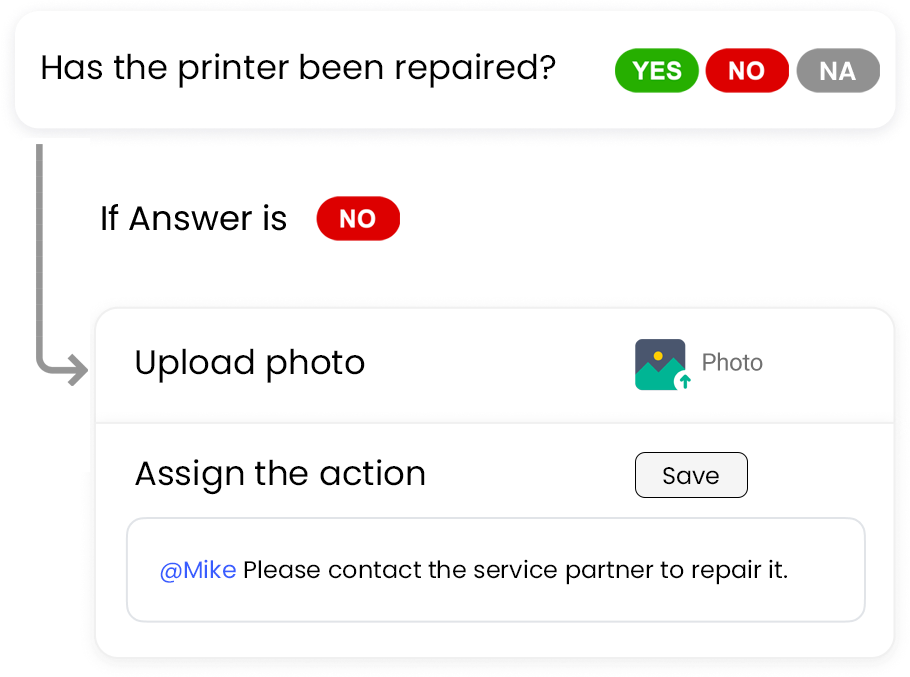
Edit & customize templates as per your needs in simple steps

Pulse allows you to edit the checklists from the library to suit your specific needs. With our smart checklist builder and editor, you can infuse logic in your questions for more clarity and better visibility.

SIGN UP TO EDIT TEMPLATES
Digitize your existing templates in simple steps

Pulse helps you convert your existing inspection templates into digital ones. Simply upload them in PDF, Excel and Word format and leave the rest for our support team. We will get back to you with digital forms.