EV Software Diagnostics and Data Security Checklist

EV Software Diagnostics and Data Security Checklist

Compliance - Data Privacy & Confidentiality
Data from vehicle diagnostics does not include customer personal data.
All software development follows secure coding standards (e.g., ISO/SAE 21434).
Third-party software components used in diagnostics are vetted and approved.
Incident response plan exists for cybersecurity breaches or data loss.
Critical - Diagnostics & Calibration
Diagnostic sessions are logged with VIN, user ID, and purpose.
All diagnostic laptops and equipment have updated antivirus and firewall enabled.
Parameter calibration is performed only with OEM-approved datasets.
Software used for diagnostics is licensed and updated to the latest OEM release.
Testing after calibration ensures all safety and performance parameters are within range.
Diagnostic connector ports are protected when not in use.
Cybersecurity - Access Control
User authentication is required before accessing vehicle software tools.
Multi-factor authentication (MFA) is enabled for all remote software access.
Login sessions time out automatically after inactivity.
User access rights are reviewed monthly for technicians and engineers.
All password policies meet company security standards (length, complexity, expiry).
Cybersecurity - Network & Communication
Vehicle communication networks (CAN, LIN, Ethernet) are protected from unauthorized access.
Wireless interfaces (Bluetooth, Wi-Fi, LTE) use secure protocols.
Diagnostic systems are not connected to public Wi-Fi networks.
Periodic vulnerability scanning is performed on all diagnostic devices.
VPN or secure tunnels are used for remote diagnostics and software uploads.
Documentation & Records - Audit Trails
All diagnostic and firmware changes maintain automated audit trails.
System audit logs retained for minimum of 2 years and reviewed quarterly.
Maintenance - Data Backup & Storage
All system backups (firmware, configs, user data) are performed regularly.
Backups are encrypted and stored in secure servers or cloud storage.
Access to backup repositories is limited to authorized IT or engineering personnel.
Periodic data restoration drills are performed to ensure backup reliability.
Firmware distribution systems maintain version history and deployment logs.
Super Critical - Software Validation & Firmware Management
All ECUs, BMS, and vehicle controllers are running approved firmware versions.
Firmware updates are verified using checksum or digital signature before installation.
All software updates follow formal approval workflow with traceable authorization.
Reprogramming tools (VCI, OBD interface, or service laptop) are OEM-approved.
Rollback or recovery image is created before any software update.
System Testing & Validation
Software validation testing includes fail-safe and functional safety checks.
Regression tests are conducted after every major firmware update.
Cyberattack simulations or penetration tests are performed annually.
Diagnostic software logs error codes and abnormal system events automatically.
ECU and BMS firmware integrity is verified via checksum at each ignition cycle.
Training & Competency - Workforce
Technicians handling firmware tools trained in cybersecurity and IT protocols.
Periodic awareness sessions conducted for engineers on phishing and malware prevention.
Only designated cybersecurity officers can approve firmware uploads.

Edit & customize templates as per your needs in simple steps

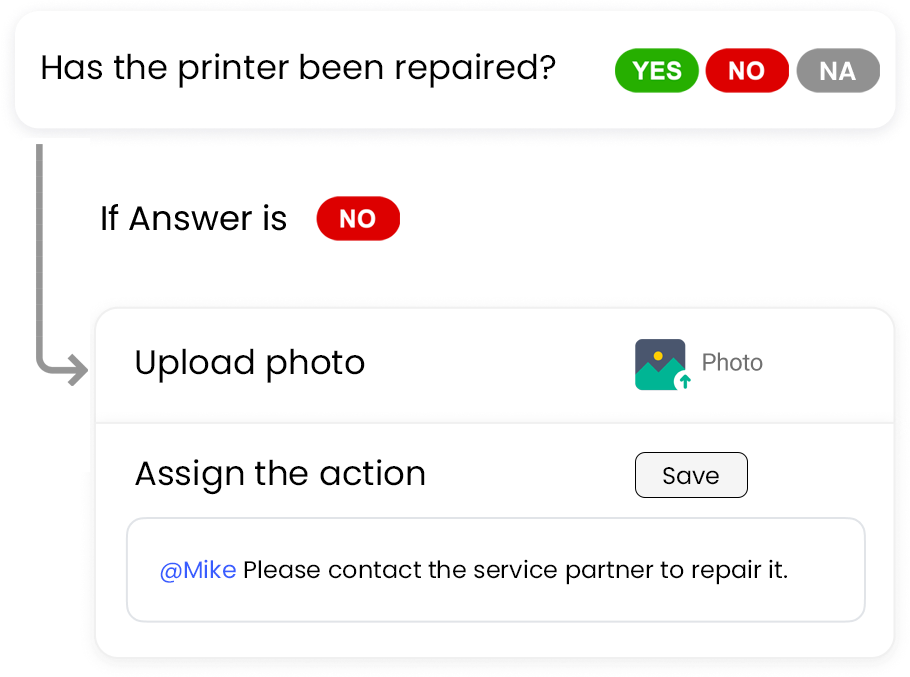
Pulse allows you to edit the checklists from the library to suit your specific needs. With our smart checklist builder and editor, you can infuse logic in your questions for more clarity and better visibility.

SIGN UP TO EDIT TEMPLATES
Digitize your existing templates in simple steps

Pulse helps you convert your existing inspection templates into digital ones. Simply upload them in PDF, Excel and Word format and leave the rest for our support team. We will get back to you with digital forms.