Documentation , Training & Compilance Checklist

Automobile Dealership & Workshop Industry

Personal Protective Equipment
All workshop employees wear appropriate PPE (gloves, safety shoes, goggles).
PPE issued by management is in good condition and regularly replaced.
Technicians working in paint or chemical areas use respirators or masks.
Hearing protection used in high noise zones (compressor, denting).
Employees working on lifts or under vehicles wear hard hats.
Safety signs displayed in all workshop zones (No Smoking, PPE, Caution).
Emergency exits, fire extinguishers, and assembly points properly marked.
MSDS (Material Safety Data Sheets) displayed for all chemicals used.
Toolbox talks or safety briefings conducted weekly.
Safety instructions available in local language for all employees.
Workshop floors free of oil, grease, and debris.
Oil drip trays used during all service and repair operations.
Handwashing stations with soap and towels available near work area.
Housekeeping schedule followed for each bay and common area.
Compressed air lines and power cords routed safely and elevated from floor.
Floor mats and anti-skid surfaces maintained near wash and service areas.
Used oil, filters, and coolant collected in designated containers.
Hazardous waste disposed only through authorized recycler.
Dry waste (metal, rubber, plastic) segregated from hazardous waste.
Waste bins labeled and covered with lids.
No burning or dumping of workshop waste on premises.
Chemicals stored in ventilated, fireproof cabinets.
All chemical containers labeled with content and hazard symbols.
Spill control kits available near fuel and paint areas.
Fuel dispensing areas equipped with grounding cables and extinguishers.
Battery handling done with acid-resistant gloves and face shields.
Chemical waste disposed through authorized vendor with manifest.
Employees trained on safe lifting techniques.
Workstations designed to reduce awkward postures or strain.
Technicians use mechanical aids (cranes, hoists) for heavy parts.
Breaks scheduled between long repair jobs to prevent fatigue.
Lighting and airflow adequate to reduce heat and strain.
New employees given safety induction training before starting work.
Fire and electrical safety training conducted bi-annually.
Accident/near-miss incidents discussed in monthly safety meeting.
Posters and awareness boards displayed promoting “Zero Accident Culture.”
Safety inspection checklist used daily by supervisor.
Unsafe acts or conditions reported immediately to safety officer.
First aid box fully stocked and inspected weekly.
Fire extinguishers and emergency lights functional and inspected monthly.

Edit & customize templates as per your needs in simple steps

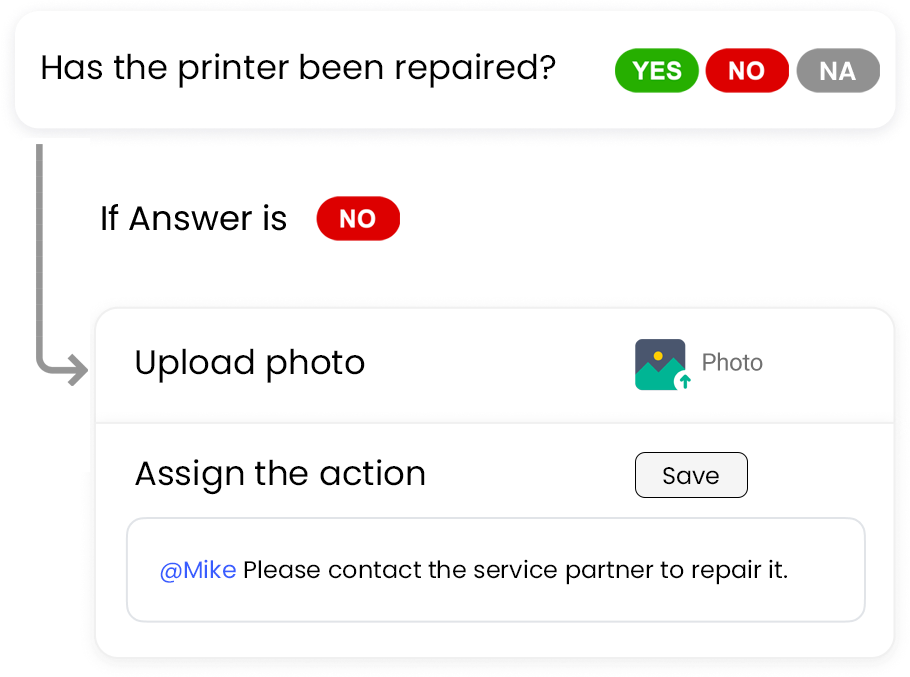
Pulse allows you to edit the checklists from the library to suit your specific needs. With our smart checklist builder and editor, you can infuse logic in your questions for more clarity and better visibility.

SIGN UP TO EDIT TEMPLATES
Digitize your existing templates in simple steps

Pulse helps you convert your existing inspection templates into digital ones. Simply upload them in PDF, Excel and Word format and leave the rest for our support team. We will get back to you with digital forms.