Catering Operations Compilance Checklist

Food and Beverage

Maintenance & Sanitation
Cleaning of premises/equipment follows a documented schedule; no stagnant water is present.
Preventive maintenance of machinery is done as per manufacturer guidelines.
Measuring and monitoring devices are calibrated periodically.
Pest control is conducted by licensed personnel and records are kept.
No visible pest activity or infestation inside premises.
Drains are well designed, equipped with grease traps and pest barriers.
Waste and refuse are cleared regularly to avoid accumulation.
Operational Controls
All incoming materials are sourced from approved vendors as per internal specifications.
Raw materials are checked upon receipt for spoilage, safety, and quality.
Products (raw, semi, or final) are stored under appropriate hygienic and temperature-controlled conditions. FIFO/FEFO is practiced.
Ingredients are cleaned thoroughly before preparation.
Segregation between raw/cooked and veg/non-veg foods is maintained.
All food-contact equipment is sanitized before and after use.
Frozen foods are thawed under safe conditions; no re-storage of thawed food is allowed.
Cooking of veg items reaches ≥60°C for required time; non-veg items meet minimum core temperature of ≥70°C.
Cooked food is cooled quickly from 60°C → 21°C within 2 hours, then to ≤5°C within next 2 hours.
Food portioning occurs under hygienic conditions, preferably under refrigeration.
Hot foods are held at ≥65°C, cold foods ≤5°C, frozen items at –18°C.
Reheating achieves ≥75°C for at least 2 minutes; improper reheating methods are avoided.
Oil quality is verified regularly (color, odor, residues).
Transport vehicles are clean, temperature-controlled, and maintained in good repair.
Food and non-food items in transport are kept physically separated.
Crockery, cutlery, and accompaniments are sanitized and hygienic.
Packaging and wrapping materials are food-grade and clean.
Premises & Infrastructure
Layout of premises ensures sufficient working space and allows effective cleaning, preventing dust or pest entry.
Internal fittings and structures are constructed with non-toxic, non-porous materials.
Walls, ceilings, and doors are intact and free from peeling paint, condensation, or debris.
Flooring is slip-resistant, waterproof, and appropriately sloped.
Windows are kept closed or fitted with insect-proof screens when opened.
Doors are smooth, non-absorbent, and designed to block pest entry.
Potable water (tested twice yearly as per IS:10500 standards) is used for food contact and preparation.
Containers and equipment are non-corrosive, easy to clean, and made of food-grade material.
Facilities exist for heating, cooling, freezing, and proper temperature monitoring.
Lighting is adequate and fixtures are shielded to avoid contamination risk.
Ventilation across premises is sufficient and functional.
Secure storage areas are available for food, chemicals, packaging, and staff belongings.
Handwashing stations, toilets, and changing facilities for staff are adequate.
Food materials are tested in-house or through accredited labs, with records maintained.
Regulatory Compliance
Does the food business hold a valid and updated FSSAI license displayed at a visible spot?
Staff Hygiene & Health
Annual medical checks and vaccinations for food handlers are documented.
Staff with illness, wounds, or infections are restricted from handling food.
Food handlers follow personal hygiene standards: clean attire, no jewelry, handwashing, trimmed nails, etc.
Protective clothing (aprons, gloves, head covers) is provided and used where necessary.
Training & Documentation
Periodic internal/external audits are conducted and records are maintained.
Customer grievance redressal mechanism is available and functional.
Staff are trained in food safety practices; training records are available.
Documentation and records are retained for a minimum of one year.

Edit & customize templates as per your needs in simple steps

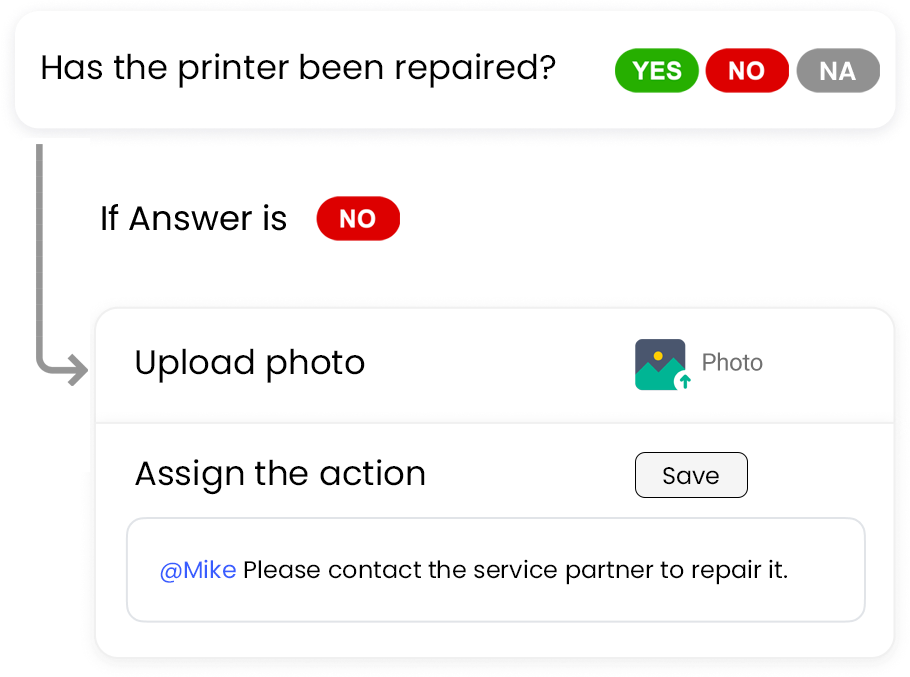
Pulse allows you to edit the checklists from the library to suit your specific needs. With our smart checklist builder and editor, you can infuse logic in your questions for more clarity and better visibility.

SIGN UP TO EDIT TEMPLATES
Digitize your existing templates in simple steps

Pulse helps you convert your existing inspection templates into digital ones. Simply upload them in PDF, Excel and Word format and leave the rest for our support team. We will get back to you with digital forms.